Week 2
Your baby is the size of a
Poppy Seed
< 1 mm
Length
< 1 g
Weight
2 Weeks Pregnant: Ovulation and the Fertile Window
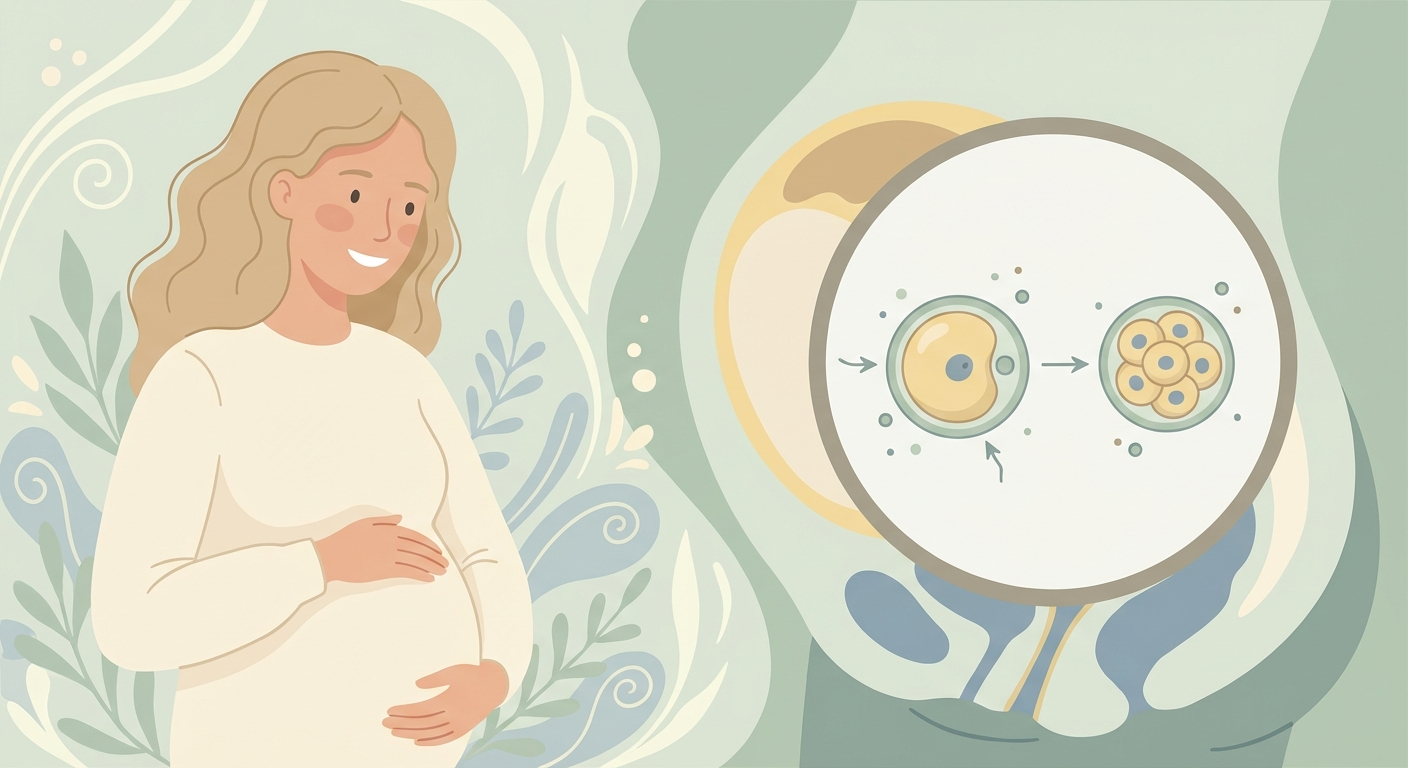
At 2 weeks pregnant (by medical dating), you’re still not technically pregnant yet—but this is when ovulation typically occurs. Week 2 is your fertile window, the time when conception is most likely to happen. Your body is releasing a mature egg that will travel down the fallopian tube, where it may meet sperm and become fertilized.1
What’s Happening at 2 Weeks?
Week 2 of pregnancy is all about ovulation for most people with a typical 28-day menstrual cycle. This is the week when your body releases a mature egg, creating the opportunity for conception.
Your menstrual period has ended and your body has spent the past week building up the uterine lining with nutrient-rich tissue. Hormone levels are shifting in preparation for ovulation and potential pregnancy.
Estrogen levels rise: In the days leading up to ovulation, estrogen levels increase significantly. This hormone surge triggers several important changes: it thickens the uterine lining (endometrium), changes cervical mucus to a consistency that helps sperm survive and travel, and triggers the release of luteinizing hormone (LH).2
The LH surge: Around the middle of your cycle (typically day 12-14 for a 28-day cycle), your pituitary gland releases a surge of luteinizing hormone. This surge triggers the final maturation and release of the egg from the ovary—the process we call ovulation.3
Ovulation occurs: Usually 24-36 hours after the LH surge begins, the dominant follicle in your ovary ruptures and releases a mature egg. This egg is swept into the fallopian tube by tiny hair-like structures called fimbriae.4
The egg awaits fertilization: Once released, the egg can survive for 12-24 hours. During this window, if sperm are present in the fallopian tube, fertilization can occur. The fertilized egg (now called a zygote) will then begin its journey toward the uterus while dividing into multiple cells.5
Understanding Your Fertile Window
Your fertile window is the timeframe when pregnancy is possible—typically the five days before ovulation plus the day of ovulation itself.6
This six-day window exists because sperm can survive in the female reproductive tract for up to five days under optimal conditions. The most fertile days are the two to three days right before ovulation and the day of ovulation itself.7
For a typical 28-day cycle:
- Day 1-5: Menstruation (week 1)
- Day 6-13: Pre-ovulation (late week 1, early-mid week 2)
- Day 10-15: Fertile window (mid-late week 2)
- Day 14: Ovulation (typically end of week 2)
- Day 15-28: Post-ovulation (weeks 3-4)
However, cycle length varies significantly among individuals, and even the same person can have different cycle lengths from month to month. Cycle lengths from 21-35 days are considered normal.8
Signs and Symptoms of Ovulation
Many people notice subtle changes in their body around ovulation. These signs can help you identify your fertile window:
Changes in cervical mucus: As ovulation approaches, cervical mucus becomes clear, stretchy, and slippery—similar to raw egg white. This “fertile” mucus helps sperm travel through the cervix and survive longer in the reproductive tract.9
Mild pelvic or abdominal pain: Some people experience mittelschmerz (German for “middle pain”)—a mild ache or twinge on one side of the lower abdomen when the ovary releases an egg. This pain typically lasts a few hours to a day.10
Basal body temperature shift: Your basal body temperature (BBT) rises by about 0.5-1°F after ovulation due to increased progesterone. While this confirms ovulation has occurred, it’s not useful for timing intercourse since the temperature rises after the egg is released.11
Increased libido: Hormonal changes around ovulation may naturally increase sex drive for some people.
Breast tenderness: Some people notice mild breast sensitivity or fullness around ovulation.
Light spotting: A small percentage of people experience light spotting (called ovulation bleeding) when the follicle ruptures.
Heightened senses: Some research suggests that sense of smell may be enhanced around ovulation, though this is subtle and varies individually.12
How to Track Ovulation
If you’re trying to conceive, tracking ovulation can help you time intercourse during your most fertile days.
Ovulation predictor kits (OPKs): These urine tests detect the LH surge that occurs 24-36 hours before ovulation. They’re widely available and easy to use. Start testing a few days before you expect to ovulate (usually around day 10-11 for a 28-day cycle).13
Basal body temperature (BBT) tracking: Take your temperature with a basal thermometer first thing every morning before getting out of bed. Chart your temperatures to identify patterns. While BBT confirms ovulation has occurred, it’s most useful when tracked over several months to predict future cycles.
Cervical mucus monitoring: Check your cervical mucus daily by noting the texture and appearance. As you approach ovulation, mucus becomes clear, stretchy, and abundant.
Fertility tracking apps: Digital apps can help predict ovulation based on your cycle history, though they vary in accuracy. Apps work best when combined with other tracking methods.
Ovulation monitoring via ultrasound: For people with irregular cycles or those undergoing fertility treatment, transvaginal ultrasounds can directly observe follicle development and confirm ovulation.
Optimizing for Conception During Week 2
If you’re trying to conceive, week 2 is crucial timing:
Have regular intercourse: Aim for intercourse every 1-2 days during your fertile window (typically days 10-15 of your cycle). Daily intercourse is fine and won’t significantly decrease sperm count in people with normal sperm production.14
Don’t stress about perfect timing: While pinpointing ovulation can be helpful, stress about timing can be counterproductive. Many couples conceive by simply having regular intercourse (every 2-3 days) throughout the cycle.
Maintain healthy habits: Continue taking prenatal vitamins with folic acid, eat nutritious foods, exercise moderately, get adequate sleep, and avoid alcohol, smoking, and recreational drugs.
Consider sperm-friendly practices: Some evidence suggests that sperm-friendly lubricants or simply using less lubricant may be beneficial. Certain common lubricants can impair sperm motility.15
Position doesn’t matter as much as timing: There’s no scientific evidence that certain sexual positions increase the likelihood of conception. The most important factor is having intercourse during the fertile window.
What Happens After Ovulation?
Once ovulation occurs (typically at the end of week 2), the empty follicle transforms into a structure called the corpus luteum, which produces progesterone. Progesterone prepares the uterine lining for potential implantation and maintains early pregnancy if conception occurs.16
If the egg is fertilized in the fallopian tube (which happens during late week 2 or early week 3), it begins dividing as it travels toward the uterus over the next 3-4 days. This early cluster of cells is called a blastocyst by the time it reaches the uterus.
If fertilization doesn’t occur, the egg dissolves, hormone levels drop, and menstruation begins about two weeks later, starting a new cycle.
When to See a Healthcare Provider
Before trying to conceive: Schedule a preconception visit to review your health, medications, and any conditions that might affect pregnancy.
If you have irregular cycles: If your menstrual cycles are shorter than 21 days or longer than 35 days, or if cycle length varies significantly, talk to your healthcare provider. Irregular cycles can make conception timing difficult and may indicate an underlying hormonal issue.
If you’re not ovulating: If you’re tracking ovulation and don’t see signs of ovulation (no LH surge, no BBT rise, no cervical mucus changes), consult your provider.
If you’re over 35: People over 35 should see a fertility specialist if they haven’t conceived after 6 months of regular, unprotected intercourse. Those under 35 should wait 12 months before seeking evaluation.17
Track Your Fertile Window with Nooko
Nooko’s cycle tracking helps you identify your fertile window and understand your body’s patterns. Log your period, ovulation symptoms, and cervical mucus observations to get personalized predictions for your most fertile days.
When you conceive, Nooko seamlessly transitions to pregnancy mode, giving you week-by-week guidance from the very beginning. Your journey from trying to conceive through pregnancy is all tracked in one beautiful, easy-to-use app.
Download Nooko on the App Store | Get Nooko on Google Play
References
Footnotes
-
Cleveland Clinic. (2023). “Conception: Fertilization, Process & When It Happens.” https://my.clevelandclinic.org/health/articles/11585-conception ↩
-
Mayo Clinic. (2024). “Menstrual cycle: What’s normal, what’s not.” https://www.mayoclinic.org/healthy-lifestyle/womens-health/in-depth/menstrual-cycle/art-20047186 ↩
-
Johns Hopkins Medicine. (2025). “The Menstrual Cycle.” https://www.hopkinsmedicine.org/health/wellness-and-prevention/the-menstrual-cycle ↩
-
American College of Obstetricians and Gynecologists. (2025). “How Your Fetus Grows During Pregnancy.” https://www.acog.org/womens-health/faqs/how-your-fetus-grows-during-pregnancy ↩
-
Cleveland Clinic. (2023). “Conception: Fertilization, Process & When It Happens.” ↩
-
American College of Obstetricians and Gynecologists. (2025). “Evaluating Infertility.” https://www.acog.org/womens-health/faqs/evaluating-infertility ↩
-
Wilcox AJ, et al. (1995). “Timing of sexual intercourse in relation to ovulation—effects on the probability of conception.” New England Journal of Medicine, 333(23), 1517-1521. ↩
-
American College of Obstetricians and Gynecologists. (2024). “Abnormal Uterine Bleeding.” https://www.acog.org/womens-health/faqs/abnormal-uterine-bleeding ↩
-
NHS. (2023). “How to get pregnant: Tips for conceiving.” https://www.nhs.uk/pregnancy/trying-for-a-baby/how-to-get-pregnant/ ↩
-
Mayo Clinic. (2024). “Mittelschmerz.” https://www.mayoclinic.org/diseases-conditions/mittelschmerz/symptoms-causes/syc-20375122 ↩
-
American College of Obstetricians and Gynecologists. (2025). “Evaluating Infertility.” ↩
-
Fertility and Sterility. (2004). “Changes in olfactory perception during the menstrual cycle.” Vol. 81(1). ↩
-
American Pregnancy Association. (2024). “Ovulation Kits & Fertility Monitors.” https://americanpregnancy.org/getting-pregnant/ovulation-kits/ ↩
-
American College of Obstetricians and Gynecologists. (2025). “Evaluating Infertility.” ↩
-
American Society for Reproductive Medicine. (2024). “Optimizing natural fertility.” Fertility and Sterility, 100(3), 631-637. ↩
-
Johns Hopkins Medicine. (2025). “The Menstrual Cycle.” ↩
-
American College of Obstetricians and Gynecologists. (2025). “Evaluating Infertility.” ↩
Get Weekly Pregnancy Tips
Expert advice for every stage of your journey
No spam. Privacy policy. Unsubscribe anytime.