
Week 28
Your baby is the size of a
Eggplant
37.6 cm
Length
1 kg
Weight
28 Weeks Pregnant: Baby Can Dream
At 28 weeks pregnant, your baby is about the size of an eggplant, measuring around 14.8 inches (37.6 cm) from head to heel and weighing approximately 2.2 pounds (1 kg). Your baby’s brain is showing REM (rapid eye movement) sleep patterns, suggesting they may be dreaming. Lung development continues, and your baby is building the fat stores needed for life outside the womb.1
What’s Happening at 28 Weeks Pregnant?
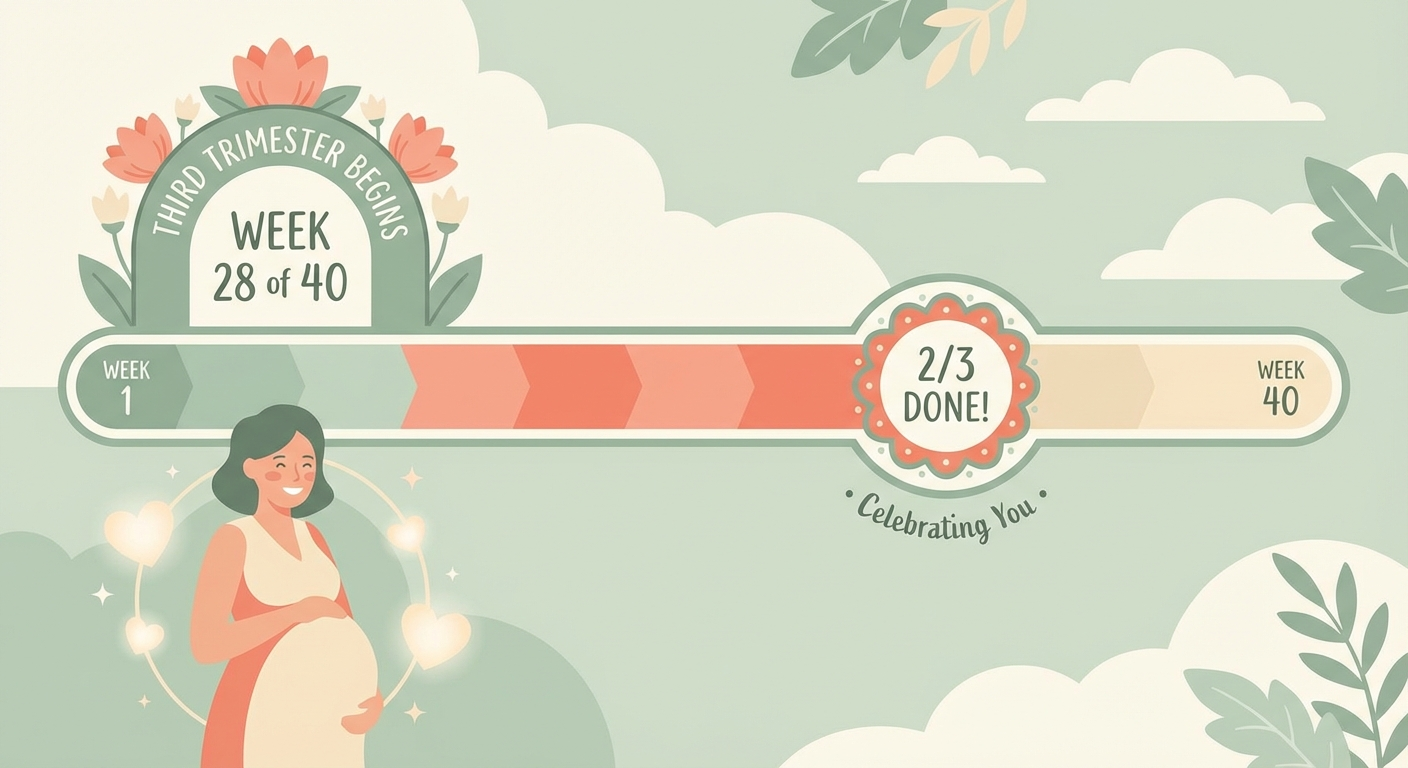
You’re now firmly in your third trimester, with approximately 12 weeks until your due date (though babies can arrive anywhere from 37-42 weeks). Week 28 brings continued rapid growth for your baby and increasingly noticeable physical changes for you.
This is typically when prenatal appointments increase from monthly to every two weeks, allowing your healthcare provider to monitor you and your baby more closely as you approach delivery. You may also have additional screening tests this week, including antibody screening and possibly glucose tolerance testing if you haven’t had it yet.2
Your uterus now extends about 3.5 inches (9 cm) above your belly button. As your baby grows, you may feel increasingly uncomfortable—back pain, heartburn, shortness of breath, and difficulty sleeping are all common at this stage.
How Big is My Baby at 28 Weeks?
Your baby at 28 weeks is about the size of an eggplant, measuring approximately 14.8 inches (37.6 cm) from crown to heel.3
Your baby now weighs around 2.2 pounds (1 kilogram)—more than doubling their weight from just four weeks ago. This rapid weight gain will continue through the remainder of pregnancy as your baby builds essential fat stores.4
Your baby’s body proportions are becoming more similar to a newborn, with the head still slightly large but more in proportion to the rest of the body.
Baby Development at Week 28
Significant developmental progress is occurring:
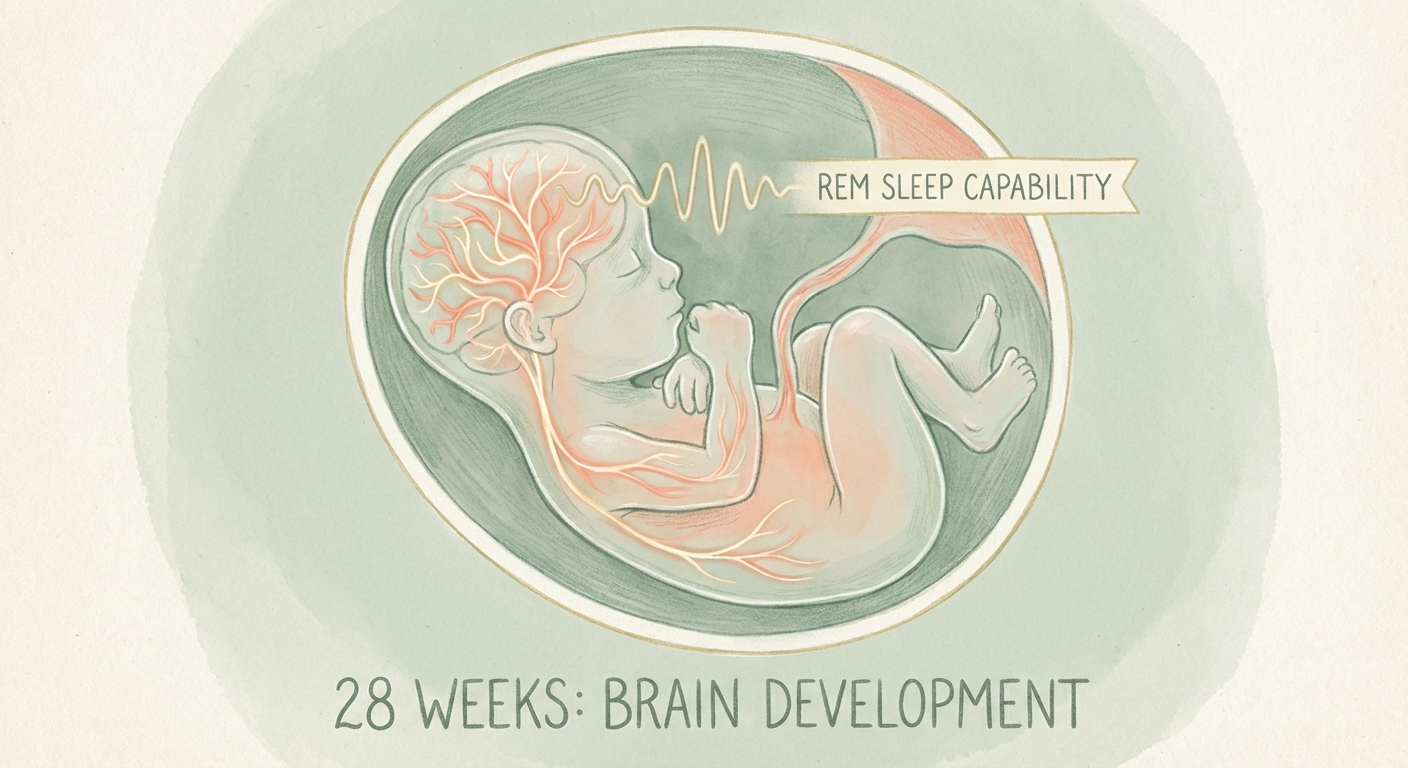
REM sleep patterns: Brain wave measurements show that your baby experiences REM (rapid eye movement) sleep, the stage of sleep associated with dreaming in adults. While we can’t know for certain what babies dream about, this sophisticated brain activity is remarkable.5
Blinking eyes: Your baby can now open and close their eyes and even blink. While the eyelids have been opening since around week 26, the blinking reflex is now more coordinated.
Longer eyelashes: Eyelashes are growing longer, and eyebrows are more prominent.
Lung maturation: Surfactant production in the lungs continues to increase. Babies born at 28 weeks have approximately 90-95% survival rates with modern neonatal intensive care, though they often require respiratory support.6
Fat accumulation: Your baby is adding more fat beneath the skin, which helps with temperature regulation and gives them a less wrinkled appearance.
Brain development: The brain continues to develop more folds and grooves (sulci and gyri), increasing the surface area for neurons and making more complex processing possible.
Bone marrow produces red blood cells: Your baby’s bone marrow is now producing most of their red blood cells, taking over this function from tissue groups and the spleen.
Immune system development: While still immature, your baby’s immune system is developing. After birth, they’ll continue to rely on antibodies from you (via breastmilk or colostrum) for immune protection.
Regular movement patterns: Your baby has established fairly regular patterns of activity and rest. You may notice your baby is more active at certain times of day (often evening, when you’re resting).
Common Symptoms at 28 Weeks Pregnant
Third trimester symptoms are in full swing:
Fatigue: The physical demands of carrying a 2+ pound baby plus amniotic fluid, placenta, and increased blood volume can leave you exhausted.7
Shortness of breath: Your uterus is pushing upward on your diaphragm, reducing lung capacity by about 5-10%. This improves after your baby drops lower in your pelvis closer to delivery.
Back and hip pain: The hormone relaxin loosens your ligaments, and your shifting center of gravity strains your back muscles. Hip pain from lying on your side is also common.8
Frequent urination: Your baby is pressing on your bladder constantly. You may wake multiple times per night to urinate.
Heartburn: Many people experience worsening heartburn in the third trimester as the growing uterus pushes stomach contents upward.9
Swelling (edema): Swelling in your feet, ankles, and hands typically increases in the third trimester. Mild swelling is normal, but sudden severe swelling requires immediate medical attention.
Braxton Hicks contractions: Practice contractions may become more frequent and sometimes uncomfortable, though they’re irregular and don’t increase in intensity.
Leg cramps: Painful nighttime leg cramps are common. Stretching before bed and staying hydrated may help.
Carpal tunnel syndrome: Swelling can compress nerves in your wrists, causing tingling, numbness, or pain in your hands. This usually resolves after delivery.
Sciatic pain: Pressure on the sciatic nerve can cause sharp, shooting pain from your lower back down your leg.
Itchy skin: Your stretching belly skin may feel itchy. Severe, persistent itching (especially on hands and feet) should be reported to your provider as it can indicate cholestasis of pregnancy.
When to Call Your Doctor
Seek immediate medical care if you experience:
- Regular contractions (4+ per hour)
- Fluid leaking or gushing from vagina
- Vaginal bleeding
- Severe swelling, especially with headache or vision changes
- Decreased fetal movement
- Severe persistent headache
- Upper right abdominal pain
Tips for Week 28
Start formal kick counting: Many providers recommend beginning kick counting around week 28. Choose a time when your baby is usually active, and note how long it takes to feel 10 movements. Most babies produce 10 movements within 2 hours.10
Know the signs of preterm labor: Familiarize yourself with warning signs: regular contractions, pelvic pressure, lower back pain, change in vaginal discharge, or fluid leaking. If you experience any of these, contact your provider immediately.
Schedule your glucose screening: If you haven’t had gestational diabetes screening yet, it’s typically done between weeks 24-28.11
Get your Tdap vaccine: The Tdap vaccine (which protects against tetanus, diphtheria, and pertussis/whooping cough) is recommended during the third trimester, ideally between weeks 27-36. This helps protect your newborn from whooping cough.12
Rh immune globulin if needed: If you’re Rh-negative, you’ll receive an injection of Rh immune globulin (RhoGAM) around week 28 to prevent Rh incompatibility issues.
Continue prenatal vitamins: Keep taking your prenatal vitamin with iron and DHA to support your baby’s development and prevent anemia.
Practice labor positions: Learn about different labor positions and practice them—squatting, hands and knees, side-lying, using a birth ball—so they feel more natural when labor begins.
Stay active: Continue gentle exercise like walking or swimming to maintain strength and stamina. Exercise can also help with back pain, mood, and sleep.13
Sleep on your left side: This position optimizes blood flow to your baby and can help reduce swelling. Use pillows for support.
Manage heartburn: Eat small, frequent meals; avoid trigger foods; stay upright after eating; and sleep with your upper body elevated.
Prepare your home: Start thinking about baby-proofing, setting up the nursery, washing baby clothes and linens, and organizing baby supplies.
Third Trimester Health Monitoring
Your healthcare provider will monitor several aspects of your health more closely now:
Blood pressure: Checked at every appointment to screen for preeclampsia, a serious condition characterized by high blood pressure and protein in urine.
Urine analysis: Tested for protein (preeclampsia indicator) and bacteria (urinary tract infection).
Fundal height: Your provider measures from your pubic bone to the top of your uterus to ensure your baby is growing appropriately.
Fetal heart rate: Checked at every appointment to confirm your baby’s wellbeing.
Position and presentation: Later in the third trimester, your provider will check whether your baby is head-down or breech.
Track Your Baby’s Movements with Nooko
At 28 weeks, monitoring your baby’s movements becomes an important way to ensure their wellbeing. Nooko makes kick counting simple with an intuitive tracker that helps you log movements and identify your baby’s patterns.
Share your kick count data with your healthcare provider, track Braxton Hicks contractions, and access week-specific information about what’s happening in your third trimester. You’re getting closer to meeting your baby!
Download Nooko on the App Store | Get Nooko on Google Play
References
Footnotes
-
Cleveland Clinic. (2025). “Fetal Development: Week-by-Week Stages of Pregnancy.” https://my.clevelandclinic.org/health/articles/7247-fetal-development-stages-of-growth ↩
-
American College of Obstetricians and Gynecologists. (2025). “Prenatal Care.” https://www.acog.org/womens-health/faqs/prenatal-care ↩
-
BabyCenter. (2025). “28 Weeks Pregnant.” https://www.babycenter.com/pregnancy/week-by-week/28-weeks-pregnant ↩
-
Mayo Clinic. (2024). “Fetal development: The 3rd trimester.” https://www.mayoclinic.org/healthy-lifestyle/pregnancy-week-by-week/in-depth/fetal-development/art-20045997 ↩
-
Mayo Clinic. (2025). “Fetal development: The 3rd trimester.” https://www.mayoclinic.org/healthy-lifestyle/pregnancy-week-by-week/in-depth/fetal-development/art-20045997 ↩
-
Merck Manual. (2025). “Respiratory Distress Syndrome in Newborns.” https://www.merckmanuals.com/home/children-s-health-issues/lung-and-breathing-problems-in-newborns/respiratory-distress-syndrome-in-newborns ↩
-
American College of Obstetricians and Gynecologists. (2025). “Exercise During Pregnancy.” https://www.acog.org/womens-health/faqs/exercise-during-pregnancy ↩
-
American College of Obstetricians and Gynecologists. (2025). “Back Pain During Pregnancy.” https://www.acog.org/womens-health/faqs/back-pain-during-pregnancy ↩
-
American College of Obstetricians and Gynecologists. (2025). “Problems of the Digestive System.” https://www.acog.org/womens-health/faqs/problems-of-the-digestive-system ↩
-
Tommy’s. (2025). “Your baby’s movements in pregnancy.” https://www.tommys.org/pregnancy-information/im-pregnant/pregnancy-news-and-blogs/your-babys-movements-pregnancy ↩
-
American College of Obstetricians and Gynecologists. (2025). “Gestational Diabetes.” https://www.acog.org/womens-health/faqs/gestational-diabetes ↩
-
Centers for Disease Control and Prevention. (2025). “Pregnancy and Whooping Cough.” https://www.cdc.gov/pertussis/pregnant/index.html ↩
-
American College of Obstetricians and Gynecologists. (2020). “Physical Activity and Exercise During Pregnancy and the Postpartum Period.” https://www.acog.org/clinical/clinical-guidance/committee-opinion/articles/2020/04/physical-activity-and-exercise-during-pregnancy-and-the-postpartum-period ↩
Get Weekly Pregnancy Tips
Expert advice for every stage of your journey
No spam. Privacy policy. Unsubscribe anytime.