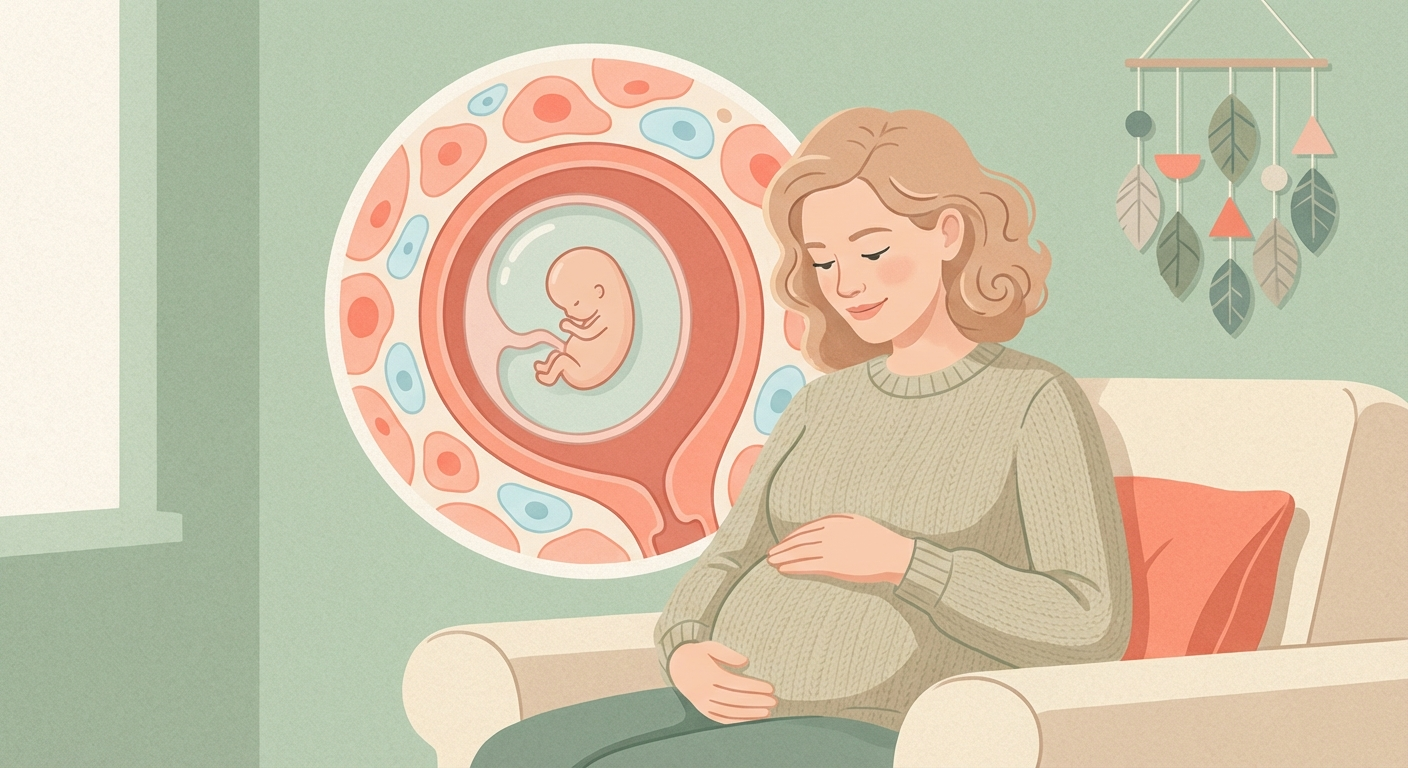
Week 4
Your baby is the size of a
Poppy Seed
1 mm
Length
< 1 g
Weight
4 Weeks Pregnant: Early Development Begins
At 4 weeks pregnant, your baby is about the size of a poppy seed (approximately 0.2 mm). Implantation is completing this week, and you may notice early pregnancy symptoms like a missed period, tender breasts, or fatigue. This is often when you’ll get a positive pregnancy test.1
What’s Happening at 4 Weeks Pregnant?
Week 4 marks a critical turning point in your pregnancy journey. This is when your fertilized egg—now called a blastocyst—completes its journey from the fallopian tube and fully embeds itself into the lining of your uterus, a process called implantation.2
Once implantation is complete, your body begins producing human chorionic gonadotropin (hCG), the pregnancy hormone that home pregnancy tests detect.3 This is why week 4 is typically when most people first discover they’re pregnant—usually right around the time of a missed period.
The blastocyst is now developing two distinct layers: the epiblast and the hypoblast. These layers will eventually form all of your baby’s organs and tissues. At the same time, the amniotic sac and yolk sac are beginning to form, providing the earliest nourishment and protection for your developing baby.4
How Big is My Baby at 4 Weeks?
Your baby at 4 weeks is incredibly tiny—about the size of a poppy seed, measuring roughly 0.2 millimeters in length.5 While this might seem impossibly small, remarkable development is already underway.
At this stage, your baby consists of about 100 cells that are rapidly dividing and specializing. Despite being barely visible to the naked eye, this tiny cluster of cells contains all the genetic information needed to develop into a full-term baby.
Baby Development at Week 4
Even though your baby is microscopic, significant developmental processes are already in motion:
Implantation: The blastocyst burrows into the nutrient-rich lining of your uterus (endometrium). This process typically completes between days 6-10 after fertilization, which corresponds to week 4 of pregnancy.6 Implantation is essential because it establishes the connection between you and your baby, allowing for nutrient and oxygen transfer.
Cell differentiation: The cells are beginning to organize into distinct layers. The inner cell mass will become the embryo itself, while the outer cells will form the placenta and amniotic sac.7
Amniotic sac formation: The fluid-filled sac that will cushion and protect your baby throughout pregnancy is starting to form. By the end of this week, the amniotic cavity will be established.
Yolk sac development: Before the placenta is fully functional, the yolk sac provides crucial nutrients to your developing baby. It also plays a role in early blood cell production.8
Hormonal changes: Once implantation occurs, the cells that will become the placenta begin producing hCG. This hormone signals your ovaries to continue producing progesterone, which maintains the uterine lining and prevents menstruation.9
Common Symptoms at 4 Weeks Pregnant
Week 4 is when pregnancy symptoms typically begin, though some people won’t notice anything yet—and that’s completely normal. Everyone’s experience is different.10
Missed period: For most people with regular cycles, a missed period is the first noticeable sign of pregnancy. This typically occurs right around week 4, prompting you to take a pregnancy test.
Tender or swollen breasts: Hormonal changes can cause breast tenderness, sensitivity, or a feeling of fullness. Your breasts may feel heavier, and your nipples might be more sensitive than usual.11
Fatigue: Many people experience significant tiredness in early pregnancy. Your body is working overtime to support the rapidly developing blastocyst, and progesterone levels are rising, which can make you feel exhausted.12
Bloating: Hormonal changes, particularly increased progesterone, can slow your digestive system and cause bloating that feels similar to pre-menstrual symptoms.
Mild cramping: Some people experience light cramping as the blastocyst implants into the uterine wall. This is typically milder than menstrual cramps.13
Spotting: Light spotting or a small amount of pinkish or brownish discharge may occur during implantation. This is called implantation bleeding and is usually much lighter than a period.14
Mood changes: Fluctuating hormones can affect your mood, causing you to feel more emotional, irritable, or weepy than usual.
When to Call Your Doctor
While many early pregnancy symptoms are normal, contact your healthcare provider if you experience:
- Heavy bleeding (soaking through a pad in an hour)
- Severe abdominal pain or cramping
- Dizziness or fainting
- Fever above 100.4°F (38°C)
- Severe nausea and vomiting that prevents you from keeping fluids down
Tips for Week 4
Take a pregnancy test: If you’ve missed your period, home pregnancy tests are typically accurate at this point. For the most reliable results, test with your first morning urine when hCG concentrations are highest.15
Start prenatal vitamins: If you haven’t already, begin taking a prenatal vitamin with at least 400-800 mcg of folic acid. Folic acid is crucial for preventing neural tube defects, and the neural tube begins forming in the coming weeks.16
Schedule your first prenatal appointment: Most healthcare providers schedule the first prenatal visit between weeks 8-12, but call now to get on the calendar. Some providers may want to see you earlier, especially if you have a medical condition or previous pregnancy complications.
Avoid harmful substances: Stop drinking alcohol, smoking, and using any non-prescribed drugs. Avoid medications unless approved by your healthcare provider.17
Eat well: Focus on a balanced diet with plenty of fruits, vegetables, whole grains, and lean proteins. This is also a good time to review foods to avoid during pregnancy, such as raw fish, unpasteurized cheeses, and deli meats.
Stay hydrated: Drink plenty of water throughout the day. Proper hydration supports the increased blood volume your body is beginning to produce.
Rest when you need to: Listen to your body. If you’re feeling tired, allow yourself to rest. Your body is doing incredible work right now.
Limit caffeine: The American College of Obstetricians and Gynecologists recommends limiting caffeine to less than 200 mg per day during pregnancy (about one 12-ounce cup of coffee).18
Be patient with yourself: Early pregnancy can bring a whirlwind of emotions—excitement, anxiety, joy, worry. All of these feelings are valid. Give yourself grace as you adjust to this new chapter.
Tracking Your Pregnancy with Nooko
At 4 weeks pregnant, you’re just beginning your pregnancy journey, and having the right tools to track your progress can provide peace of mind and valuable information to share with your healthcare provider.
The Nooko app helps you track your baby’s growth week by week, with personalized information about what’s happening at each stage of development. Log your symptoms—from fatigue and breast tenderness to mood changes and cramping—so you can identify patterns and share accurate information with your doctor.
Nooko also provides daily tips tailored to your specific week of pregnancy, gentle reminders for prenatal vitamins and hydration, and educational content about what to expect in the weeks ahead. Download Nooko to turn your pregnancy journey into a trackable, memorable experience with insights designed specifically for where you are today.
Download Nooko on the App Store | Get Nooko on Google Play
References
Footnotes
-
Cleveland Clinic. (2017). “Am I Pregnant? Early Symptoms of Pregnancy & When To Test.” https://my.clevelandclinic.org/health/articles/9709-pregnancy-am-i-pregnant ↩
-
American College of Obstetricians and Gynecologists. (2025). “How Your Fetus Grows During Pregnancy.” https://www.acog.org/womens-health/faqs/how-your-fetus-grows-during-pregnancy ↩
-
The Bump. (2024). “When Does Implantation Occur? Symptoms and Timeline.” https://www.thebump.com/a/when-does-implantation-occur ↩
-
Mayo Clinic. (2024). “Fetal development: The first trimester.” Mayo Clinic Guide to a Healthy Pregnancy, 3rd ed. ↩
-
BabyCenter. (2025). “4 Weeks Pregnant: Symptoms, Cramping & More.” https://www.babycenter.com/pregnancy/week-by-week/4-weeks-pregnant ↩
-
American College of Obstetricians and Gynecologists. (2025). “Changes During Pregnancy.” https://www.acog.org/womens-health/infographics/changes-during-pregnancy ↩
-
Persaud TVN, et al. (2025). “Fetal period: Ninth week to birth.” In: The Developing Human: Clinically Oriented Embryology. 12th ed. Elsevier. ↩
-
Cleveland Clinic. (2025). “Fetal Development: Week-by-Week Stages of Pregnancy.” https://my.clevelandclinic.org/health/articles/7247-fetal-development-stages-of-growth ↩
-
Johns Hopkins Medicine. (2025). “10 Early Signs of Pregnancy.” https://www.hopkinsmedicine.org/health/wellness-and-prevention/10-early-signs-of-pregnancy ↩
-
Mayo Clinic. “Symptoms of pregnancy: What happens first.” https://www.mayoclinic.org/healthy-lifestyle/getting-pregnant/in-depth/symptoms-of-pregnancy/art-20043853 ↩
-
NHS. “Signs and symptoms of pregnancy.” https://www.nhs.uk/pregnancy/trying-for-a-baby/signs-and-symptoms-of-pregnancy/ ↩
-
Johns Hopkins Medicine. (2025). “10 Early Signs of Pregnancy.” ↩
-
Cleveland Clinic. (2025). “Implantation Bleeding: Causes, Symptoms & What To Expect.” https://my.clevelandclinic.org/health/symptoms/24536-implantation-bleeding ↩
-
Wyckoff Heights Medical Center. (2025). “Pregnancy Symptoms: Early Signs, How To Notice, When To Test.” https://whmcny.org/blog/ob-gyn/pregnancy-symptoms/ ↩
-
Cleveland Clinic. (2017). “Am I Pregnant? Early Symptoms of Pregnancy & When To Test.” ↩
-
American College of Obstetricians and Gynecologists. “Nutrition During Pregnancy.” ↩
-
Mayo Clinic. (2024). Mayo Clinic Guide to a Healthy Pregnancy, 3rd ed. ↩
-
American College of Obstetricians and Gynecologists. “Moderate Caffeine Consumption During Pregnancy.” ↩
Get Weekly Pregnancy Tips
Expert advice for every stage of your journey
No spam. Privacy policy. Unsubscribe anytime.