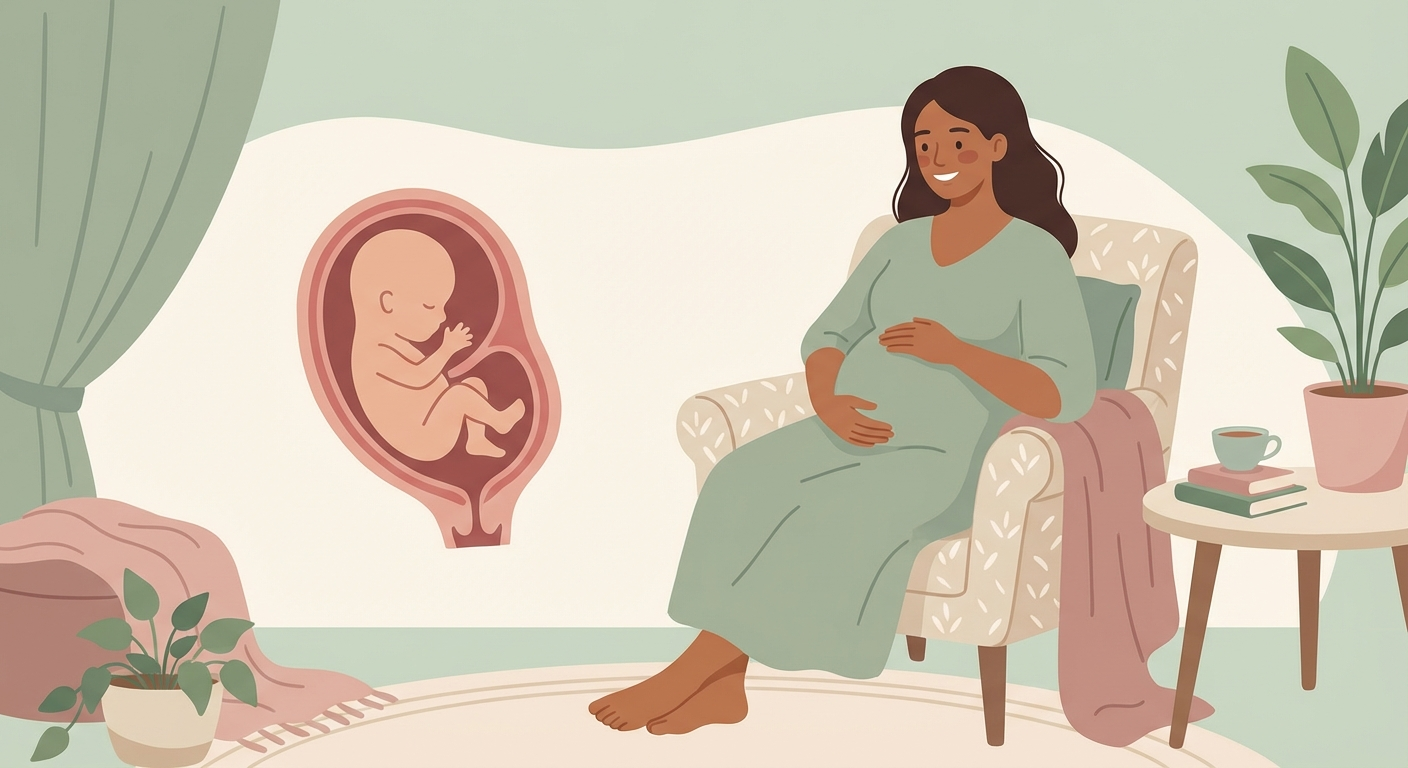
Week 8
Your baby is the size of a
Raspberry
1.6 cm
Length
1 g
Weight
8 Weeks Pregnant: Webbed Fingers and Toes Emerge
At 8 weeks pregnant, your baby is about the size of a raspberry (approximately 16 mm or 0.6 inches). Tiny fingers and toes are beginning to form, though they’re still webbed. All major organs and body systems are developing, and your baby is making spontaneous movements—though you can’t feel them yet.1
What’s Happening at 8 Weeks Pregnant?
Week 8 marks the end of the embryonic period—by the end of this week, your baby will officially transition from an embryo to a fetus. This is a major milestone in development, as it signifies that all essential structures have been established and will continue to grow and mature for the remainder of pregnancy.2
Your baby is looking more human every day, with arms, legs, and facial features becoming increasingly recognizable. The tail-like structure at the base of the spine is disappearing. While your baby is still tiny, the proportions are starting to shift, with the body beginning to catch up to the head size.
For you, pregnancy symptoms may still be intense, but you’re nearing the end of the most challenging weeks. Many people find that symptoms begin to ease around weeks 10-12 as hormone levels start to stabilize.3
How Big is My Baby at 8 Weeks?
Your baby at 8 weeks is about the size of a raspberry or kidney bean, measuring approximately 16 millimeters (0.63 inches) from crown to rump and weighing about 1 gram (0.04 ounces).4
Your baby has grown significantly—nearly doubling in size again this week. The embryo is starting to straighten out from its curved position, and the head, while still large relative to the body, is becoming more proportional.
Baby Development at Week 8
This is a week of remarkable refinement and development:
Fingers and toes: The paddle-shaped hands and feet from previous weeks now have visible notches between the developing fingers and toes. They’re still webbed (connected by thin membranes), but distinct digits are emerging. Over the next few weeks, the webbing will disappear, leaving individual fingers and toes.5
Facial development: Your baby’s face is becoming more defined and human-like:
- Eyes are developing color (iris pigment) and are moving toward the front of the face
- Eyelids are beginning to form and will soon cover the eyes
- The tip of the nose is visible
- Upper lip is formed
- Ears are continuing to develop both externally and internally
- The tongue now has taste buds forming6
Limb development: Arms and legs are lengthening and joints are forming. Elbows, wrists, knees, and ankles are now present, allowing for more complex movements. Your baby may be moving arms and legs, bending elbows, and even flexing wrists.7
Organ systems: All major organs and body systems are now present and developing:
- Heart: Beating at 150-170 beats per minute with distinct chambers functioning
- Brain: Continuing to grow rapidly with nerve cells branching out to connect with each other
- Kidneys: Beginning to produce urine
- Intestines: Growing longer (still partially in the umbilical cord due to limited space)
- Lungs: Developing bronchial tubes
- Bones: Beginning to harden from cartilage, though most bones are still soft
- Muscles: Developing throughout the body, enabling movement8
Reproductive organs: If you’re having a boy, his testes are developing and beginning to produce testosterone. If you’re having a girl, her ovaries are forming. However, external genitalia aren’t yet distinct enough to determine sex on ultrasound.
Skin: Your baby’s skin is paper-thin and translucent. Blood vessels are visible through the skin.
Nerve cells: Nerve cells in the brain are branching out to form early neural pathways. These connections will eventually allow your baby to think, feel, move, and process sensory information.
Spontaneous movements: Your baby is making spontaneous, jerky movements, though the embryo is still too small for you to feel these motions. These early movements are essential for muscle and bone development.
Common Symptoms at 8 Weeks Pregnant
Week 8 often brings continued intensity of first-trimester symptoms:9
Morning sickness: Nausea and vomiting may still be at their peak. Some people feel nauseous all day, while others have specific trigger times. Remember, this typically improves in the coming weeks.
Extreme fatigue: You may feel exhausted, even after a full night’s sleep. Your body is working hard to support rapid fetal development, and that requires significant energy.
Breast changes: Your breasts may be noticeably larger and tender. The areolas may be darker, and you might see more prominent veins. Some people go up a bra size or two during the first trimester.
Frequent urination: Your growing uterus is putting pressure on your bladder, and increased blood volume means your kidneys are working overtime. Nighttime bathroom trips are common.
Food aversions and cravings: You may find certain foods completely unappealing or develop intense cravings. These preferences can change from day to day.
Heightened emotions: Mood swings, tearfulness, and irritability are common due to hormonal changes and the physical challenges of early pregnancy.
Bloating and constipation: Progesterone slows your digestive system, leading to uncomfortable bloating and constipation.
Mild cramping: You may feel occasional mild cramping or pulling sensations as your uterus expands. This is usually normal unless accompanied by bleeding or severe pain.
Increased vaginal discharge: You may notice more vaginal discharge than usual. As long as it’s thin, milky white, and odorless, this is normal (it’s called leukorrhea).
Minimal weight changes: You may have gained 1-2 pounds, maintained your pre-pregnancy weight, or even lost weight due to morning sickness. All of these are typical at this stage.
Pregnancy “glow” or acne: Some people develop clearer, glowing skin, while others experience breakouts due to hormonal changes. Both are normal.
When to Call Your Doctor
Seek medical attention if you experience:
- Heavy bleeding (soaking through a pad in an hour) or passing clots or tissue
- Severe abdominal pain, especially one-sided
- Severe, persistent vomiting preventing fluid intake for 24+ hours
- Signs of dehydration (dark urine, dizziness, dry mouth)
- Fever above 100.4°F (38°C)
- Painful urination or urinary urgency with little output
Tips for Week 8
Continue managing morning sickness: Use the strategies that have been working—small frequent meals, bland foods, ginger, staying hydrated. If symptoms are severe, ask your doctor about safe medications.
Address constipation: Increase fiber intake through fruits, vegetables, and whole grains. Drink plenty of water. Gentle exercise like walking can help. Ask your doctor about fiber supplements or stool softeners if needed.
Invest in a supportive bra: If your breasts have grown significantly, a well-fitting, supportive bra can reduce discomfort. Consider sleeping in a soft, wireless bra if it helps.
Stay hydrated: Aim for 8-10 glasses of water daily. Good hydration helps with constipation, reduces fatigue, and supports increased blood volume.
Rest when you need to: Don’t fight the fatigue. Your body needs extra rest. Take naps, go to bed early, and reduce commitments when possible.
Gentle exercise: If you feel up to it, light exercise like walking or prenatal yoga can boost energy and mood. Listen to your body and don’t overdo it.
Start thinking about maternity clothes: You may not need them yet, but elastic waistbands and flowy tops can provide comfort as your body changes.
Take photos: Consider taking weekly photos of your changing body. Many people enjoy looking back at these progression photos later.
Connect with other pregnant people: Whether in person or online, connecting with others at similar stages can provide support and reassurance.
Be patient: You’re nearing the end of the most challenging trimester. Most people feel significantly better in the coming weeks.
Tracking Your Pregnancy with Nooko
At 8 weeks pregnant, your baby is making incredible progress—transitioning from embryo to fetus and developing all the structures needed for life. Tracking these weekly changes helps you stay connected to your pregnancy, even when you can’t yet feel your baby move.
Nooko provides detailed week-by-week information about your baby’s development, with beautiful illustrations showing exactly what’s happening inside your body. Log your symptoms to identify patterns and share accurate information with your healthcare provider. Track your energy levels, nausea, cravings, and mood changes to better understand your pregnancy experience.
Set reminders for prenatal vitamins, water intake, and appointments. Access evidence-based tips for managing uncomfortable symptoms. And celebrate milestones like the embryo-to-fetus transition with Nooko’s journal feature. Download Nooko to turn your pregnancy into a trackable, meaningful journey.
Download Nooko on the App Store | Get Nooko on Google Play
References
Footnotes
-
Cleveland Clinic. (2025). “Fetal Development: Week-by-Week Stages of Pregnancy.” https://my.clevelandclinic.org/health/articles/7247-fetal-development-stages-of-growth ↩
-
American College of Obstetricians and Gynecologists. (2025). “How Your Fetus Grows During Pregnancy.” https://www.acog.org/womens-health/faqs/how-your-fetus-grows-during-pregnancy ↩
-
Johns Hopkins Medicine. (2025). “10 Early Signs of Pregnancy.” https://www.hopkinsmedicine.org/health/wellness-and-prevention/10-early-signs-of-pregnancy ↩
-
BabyCenter. (2025). “8 weeks pregnant: Symptoms, baby development, and more.” ↩
-
The Endowment for Human Development. (2006). “7 to 8 Weeks | Prenatal Overview.” https://www.ehd.org/dev_article_unit8.php ↩
-
March of Dimes. (2023). “Pregnancy Week by Week.” https://www.marchofdimes.org/pregnancy-week-week ↩
-
Mayo Clinic. (2024). “Fetal development: The first trimester.” https://www.mayoclinic.org/healthy-lifestyle/pregnancy-week-by-week/in-depth/prenatal-care/art-20045302 ↩
-
Mount Sinai. “Fetal development Information.” https://www.mountsinai.org/health-library/special-topic/fetal-development ↩
-
Mayo Clinic. “Symptoms of pregnancy: What happens first.” https://www.mayoclinic.org/healthy-lifestyle/getting-pregnant/in-depth/symptoms-of-pregnancy/art-20043853 ↩
Get Weekly Pregnancy Tips
Expert advice for every stage of your journey
No spam. Privacy policy. Unsubscribe anytime.