Back Pain During Pregnancy: Relief & Prevention
Expert-backed solutions for pregnancy back pain. Learn about safe stretches, proper posture, support belts, and when to see a doctor.
By Nooko Team
Back pain affects 50-70% of pregnant people, typically starting in the second trimester and often worsening in the third trimester. The primary causes are your shifting center of gravity, weight gain, hormone-relaxed ligaments, and postural changes. Relief comes from gentle exercise, proper posture, pregnancy support belts, physical therapy, and safe pain management strategies.1
Why Does Pregnancy Cause Back Pain?
Weight gain and center of gravity: As your baby grows, your center of gravity shifts forward, straining your lower back muscles. The average pregnancy weight gain of 25-35 pounds adds significant stress to your spine.2
Hormone relaxin: Your body produces relaxin to loosen ligaments in preparation for childbirth. While necessary for delivery, relaxin also loosens ligaments throughout your body, including in your spine and pelvis, reducing stability and causing pain.3
Postural changes: To compensate for your growing belly, you may unconsciously arch your back, creating muscle strain.
Muscle separation (diastasis recti): The abdominal muscles may separate along the center line, reducing core support for your spine.
Stress and poor sleep: Physical and emotional stress, combined with difficulty sleeping, can exacerbate muscle tension.
Types of Pregnancy Back Pain
Lower back pain (lumbar pain): Most common type, felt in the lower spine, often radiating to the buttocks and legs. Worsens with prolonged standing, walking, or sitting.
Posterior pelvic pain: Felt deeper than lumbar pain, typically in the buttocks and back of thighs. Often worse when climbing stairs, getting out of bed, or transitioning positions.
Sciatica: Sharp, shooting pain radiating from lower back down one leg, caused by pressure on the sciatic nerve from your growing uterus or baby’s position.
Safe Relief Strategies
Exercise and Stretching
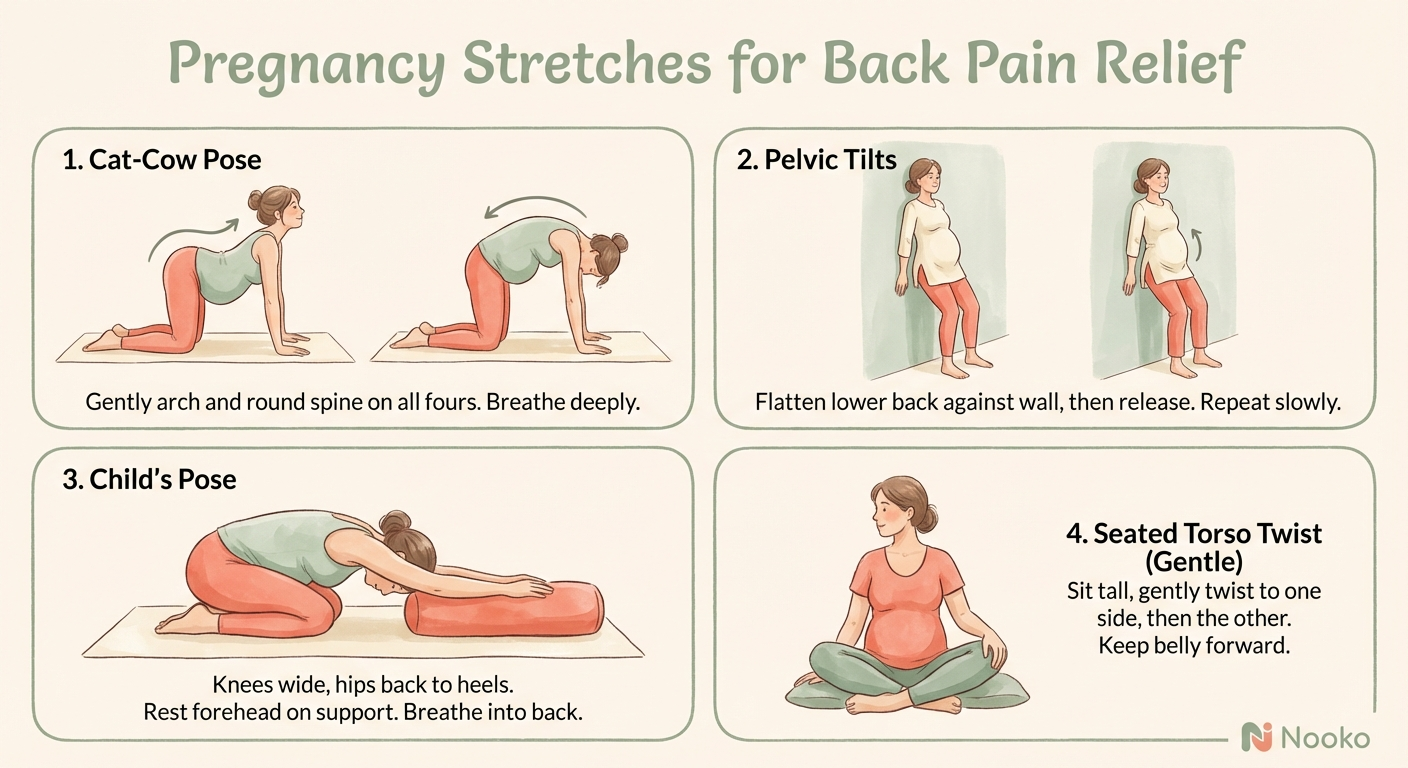
Prenatal yoga: Gentle yoga specifically designed for pregnancy strengthens core and back muscles while improving flexibility. Poses like cat-cow, child’s pose, and supported forward folds can relieve tension.4
Swimming: Water supports your weight, taking pressure off your spine while allowing low-impact exercise that strengthens muscles.
Walking: Regular walking maintains strength and flexibility without jarring impact.
Pelvic tilts: Stand against a wall or lie on your back (early pregnancy only), flatten your lower back against the surface by tightening abdominal muscles, hold for 5 seconds, repeat 10 times.
Cat-cow stretch: On hands and knees, alternate arching back (cow) and rounding spine (cat). This gentle movement relieves tension and improves flexibility.
Hip flexor stretches: Tight hip flexors contribute to back pain. Gentle lunges can help (ask your provider or physical therapist for proper form).
Posture and Body Mechanics
Stand tall: Keep shoulders back, chest forward, and avoid arching your lower back. Imagine a string pulling up from the crown of your head.
Sit with support: Use a small pillow or rolled towel to support the curve of your lower back. Keep feet flat on floor or use a footrest.
Sleep positioning: Sleep on your left side with a pillow between your knees and another supporting your belly. This aligns your spine and reduces strain.5
Avoid twisting: When lifting or reaching, move your whole body rather than twisting at the waist.
Lifting technique: If you must lift (though heavy lifting should be avoided), squat down using leg muscles rather than bending at the waist.
Support Devices
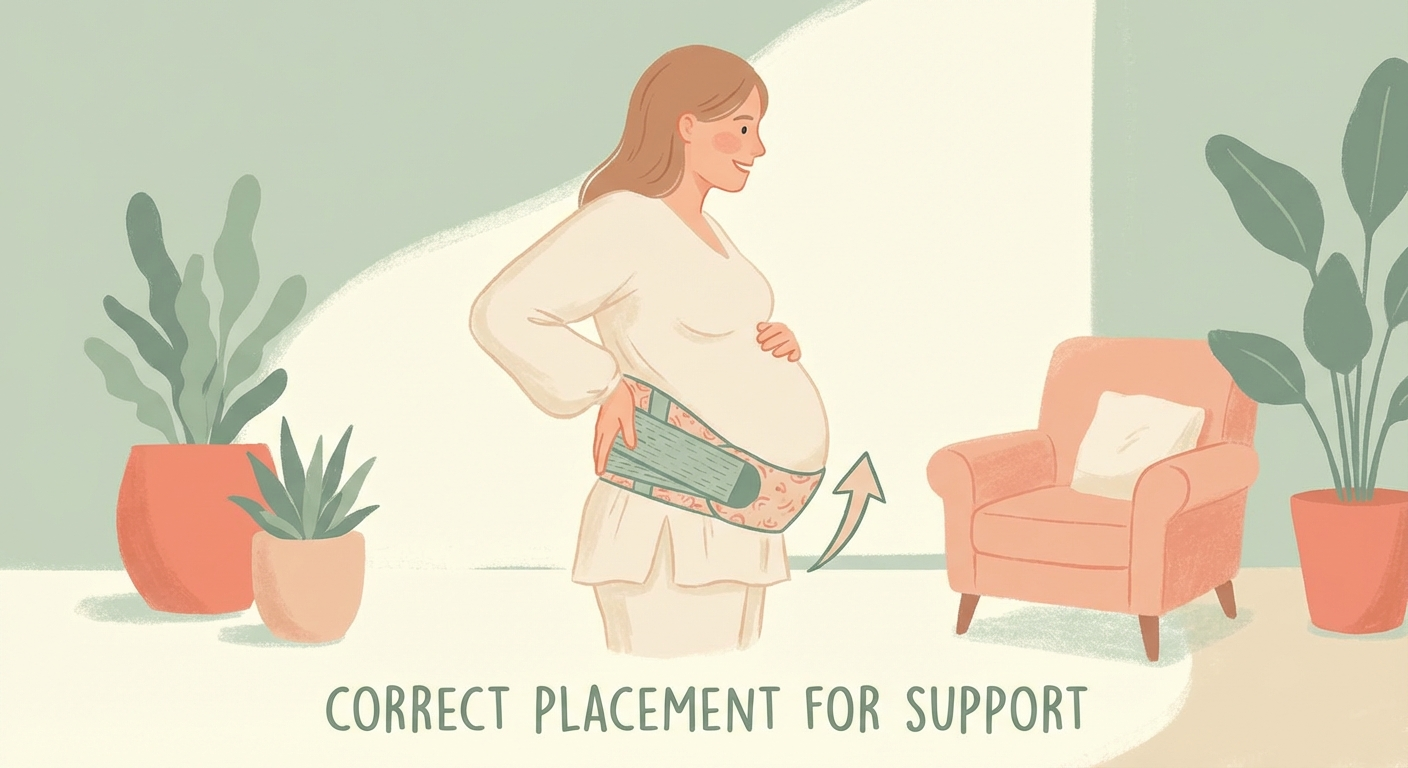
Pregnancy support belt: Also called maternity belt or belly band, these wrap under your belly and around your lower back, redistributing weight and providing support. Studies show they reduce pain for many people.6
Supportive footwear: Avoid high heels. Wear supportive, cushioned shoes with good arch support.
Pregnancy pillow: Full-body pregnancy pillows support proper sleep alignment.
Heat and Cold Therapy
Heat: Apply a heating pad on low setting to sore areas for 15-20 minutes. Warm (not hot) baths can also help. Avoid hot tubs and very hot baths during pregnancy.
Cold: Ice packs wrapped in a towel can reduce inflammation. Apply for 10-15 minutes at a time.
Alternating: Some people find alternating heat and cold provides the most relief.
Massage and Manual Therapy
Prenatal massage: Performed by a therapist certified in prenatal massage, using proper positioning (side-lying) and techniques safe for pregnancy. Research shows prenatal massage reduces back pain.7
Physical therapy: A physical therapist specializing in pregnancy can teach exercises, provide manual therapy, and create a personalized treatment plan.
Chiropractic care: Some chiropractors specialize in prenatal care using techniques safe for pregnancy. Always inform them you’re pregnant.
Pain Medication
Acetaminophen (Tylenol): Generally considered safe during pregnancy for short-term pain relief. Always use the lowest effective dose and consult your provider.8
Avoid: NSAIDs like ibuprofen (Advil, Motrin) and naproxen (Aleve), especially in the third trimester, as they can affect fetal development and labor.
Topical treatments: Some topical pain relief creams may be safe—ask your provider before using any.
Prevention Strategies
Exercise regularly: Maintaining core and back strength throughout pregnancy helps prevent pain.
Watch weight gain: Stay within recommended weight gain guidelines for your pre-pregnancy BMI.
Wear supportive shoes: Avoid heels and unsupportive footwear.
Practice good posture: Be mindful of posture throughout the day.
Take breaks: If you sit or stand for long periods, take frequent breaks to stretch and move.
Sleep well: Use pillows for support and maintain side-sleeping position.
Lift properly: Avoid heavy lifting when possible; use proper technique when necessary.
When to See a Doctor
Contact your healthcare provider if you experience:9
Severe or sudden onset pain: Could indicate a serious condition.
Pain accompanied by fever, vaginal bleeding, or burning during urination: May signal infection or other complications.
Numbness or tingling: Especially in legs or groin area.
Pain that interferes with daily activities: You deserve treatment that allows you to function.
Regular, rhythmic pain before 37 weeks: Could be preterm labor.
Loss of bladder or bowel control: Requires immediate evaluation.
Track Your Back Pain with Nooko
Understanding your back pain patterns helps you identify triggers and find effective relief strategies. Nooko lets you log pain intensity, location, what makes it better or worse, and which remedies you’ve tried.
Share this data with your healthcare provider or physical therapist to develop a personalized treatment plan. Track your symptoms and find relief faster.
Download Nooko on the App Store | Get Nooko on Google Play
References
Footnotes
-
American College of Obstetricians and Gynecologists. (2025). “Back Pain During Pregnancy.” https://www.acog.org/womens-health/faqs/back-pain-during-pregnancy ↩
-
ACOG. (2025). “Weight Gain During Pregnancy.” https://www.acog.org/womens-health/faqs/weight-gain-during-pregnancy ↩
-
Segal NA, et al. (2013). “Pregnancy leads to lasting changes in foot structure.” American Journal of Physical Medicine & Rehabilitation, 92(3), 232-240. ↩
-
Curtis K, et al. (2012). “Yoga for pregnancy back pain: a systematic review.” Journal of Obstetric, Gynecologic & Neonatal Nursing, 41(4), E1-E13. ↩
-
Mayo Clinic. (2024). “Pregnancy week by week: Sleep tips.” https://www.mayoclinic.org/healthy-lifestyle/pregnancy-week-by-week/in-depth/sleeping-during-pregnancy/art-20043783 ↩
-
Carr CA. (2003). “Use of a maternity support binder for relief of pregnancy-related back pain.” Journal of Obstetric, Gynecologic & Neonatal Nursing, 32(4), 495-502. ↩
-
Field T. (2010). “Pregnancy and labor massage.” Expert Review of Obstetrics & Gynecology, 5(2), 177-181. ↩
-
American College of Obstetricians and Gynecologists. (2025). “Is it safe to take ibuprofen or naproxen during pregnancy?” https://www.acog.org/womens-health/experts-and-stories/ask-acog/is-it-safe-to-take-ibuprofen-or-naproxen-during-pregnancy ↩
-
ACOG. (2025). “Back Pain During Pregnancy.” ↩
Ready to track your pregnancy?
Join expecting parents using Nooko to track every milestone together.
Join the Nooko Beta →Get Weekly Pregnancy Tips
Expert advice for every stage of your journey
No spam. Privacy policy. Unsubscribe anytime.