Heartburn & Indigestion in Pregnancy: Safe Remedies
Pregnancy heartburn is miserable but manageable. Learn about safe remedies, foods to avoid, when to take antacids, and how to sleep comfortably.
By Nooko Team
Heartburn and acid reflux affect up to 80% of pregnant people, especially in the second and third trimesters. It’s caused by pregnancy hormones relaxing the valve between your stomach and esophagus, plus your growing uterus pushing stomach contents upward. Relief comes from eating small frequent meals, avoiding trigger foods, staying upright after eating, sleeping elevated, and using safe antacids like calcium carbonate (Tums) when needed.1
Why Pregnancy Causes Heartburn
Progesterone relaxes the esophageal sphincter: This hormone relaxes smooth muscle throughout your body, including the lower esophageal sphincter (LES)—the valve that normally prevents stomach acid from flowing back into your esophagus. When relaxed, acid can escape upward.2
Your growing uterus pushes on your stomach: As your baby grows, your uterus expands upward, physically compressing your stomach and pushing contents toward your esophagus.
Slower digestion: Pregnancy hormones slow your digestive system, meaning food stays in your stomach longer, increasing the chance of reflux.
Safe Remedies for Pregnancy Heartburn
Dietary Strategies
Eat small, frequent meals: 5-6 small meals instead of 3 large ones prevents your stomach from getting too full.3
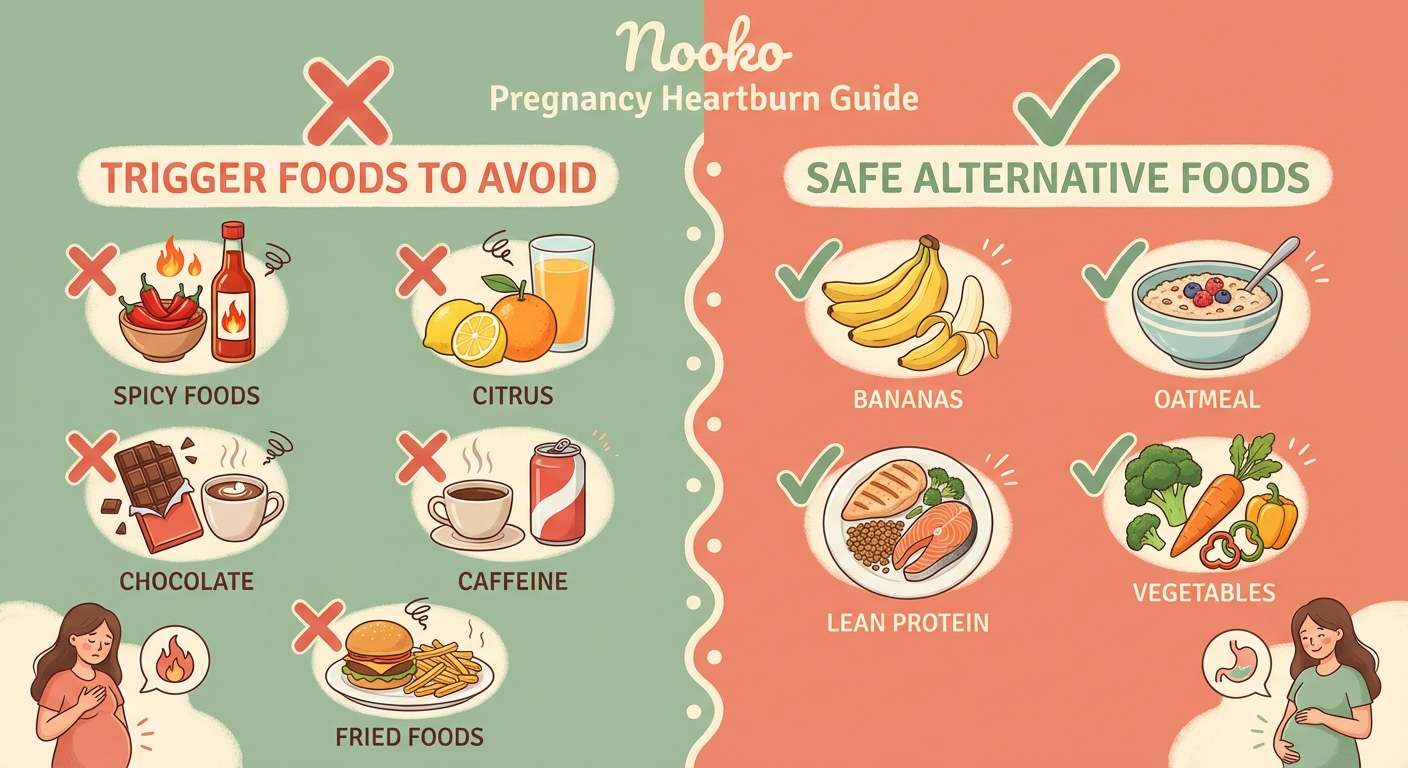
Avoid trigger foods:
- Spicy foods
- Citrus fruits and juices
- Tomatoes and tomato sauce
- Chocolate
- Fatty or fried foods
- Peppermint and spearmint
- Carbonated beverages
- Coffee and caffeinated drinks
Choose low-acid foods:
- Bananas
- Melons
- Oatmeal
- Whole grain bread
- Lean proteins (chicken, fish)
- Green vegetables
- Ginger
Don’t eat right before bed: Finish eating 2-3 hours before lying down.
Stay hydrated between meals: Drink water throughout the day, but avoid drinking large amounts with meals.
Lifestyle Modifications
Stay upright after eating: Remain sitting or standing for 1-2 hours after meals. Gravity helps keep acid in your stomach.
Elevate your upper body while sleeping: Use a wedge pillow or prop up the head of your bed 6-8 inches. Stacking regular pillows often doesn’t work as well since you tend to slip off them.4
Sleep on your left side: This position may reduce acid reflux.
Wear loose clothing: Tight clothes around your belly increase pressure on your stomach.
Chew gum: Sugar-free gum after meals stimulates saliva production, which neutralizes acid.
Don’t smoke: Smoking worsens heartburn and poses serious risks to your baby.
Safe Antacids and Medications
Calcium carbonate (Tums, Rolaids): Generally safe during pregnancy and provides calcium. Don’t exceed recommended dose.5
Magnesium hydroxide (Milk of Magnesia): Safe in moderation. Can cause diarrhea in high doses.
Famotidine (Pepcid): H2 blocker that reduces acid production. Safe during pregnancy when recommended by your provider.
Proton pump inhibitors (PPIs): Medications like omeprazole (Prilosec) or lansoprazole (Prevacid) may be prescribed for severe heartburn unrelieved by other treatments.
Avoid: Sodium bicarbonate (baking soda), which can cause fluid buildup, and aspirin-containing antacids.
Always consult your provider: Before starting any medication, even over-the-counter options.
When to Call Your Doctor
Contact your healthcare provider if you experience:6
Severe, persistent heartburn: Not relieved by lifestyle changes or safe antacids.
Difficulty swallowing: Pain when swallowing or feeling like food is stuck.
Vomiting blood: Or vomit that looks like coffee grounds.
Black, tarry stools: May indicate bleeding in digestive tract.
Severe abdominal pain: Especially if accompanied by other symptoms.
Heartburn with other symptoms: Severe headache, vision changes, or swelling (could indicate preeclampsia).
Track Your Heartburn Triggers with Nooko
Identifying what triggers your heartburn helps you avoid it. Nooko lets you log meals, symptoms, and what provided relief. Track patterns over time to understand your unique triggers and share this information with your healthcare provider for personalized recommendations.
Download Nooko on the App Store | Get Nooko on Google Play
References
Footnotes
-
American College of Obstetricians and Gynecologists. (2025). “Problems of the Digestive System.” https://www.acog.org/womens-health/faqs/problems-of-the-digestive-system ↩
-
Richter JE. (2003). “Gastroesophageal reflux disease during pregnancy.” Gastroenterology Clinics, 32(1), 235-261. ↩
-
Cleveland Clinic. (2025). “Heartburn During Pregnancy: Causes & Treatment.” https://my.clevelandclinic.org/health/diseases/12011-heartburn-during-pregnancy ↩
-
Cleveland Clinic. (2025). “Heartburn During Pregnancy: Causes & Treatment.” https://my.clevelandclinic.org/health/diseases/12011-heartburn-during-pregnancy ↩
-
American College of Obstetricians and Gynecologists. (2024). “Over-the-Counter Medications During Pregnancy.” ↩
-
ACOG. (2025). “Problems of the Digestive System.” https://www.acog.org/womens-health/faqs/problems-of-the-digestive-system ↩
Ready to track your pregnancy?
Join expecting parents using Nooko to track every milestone together.
Join the Nooko Beta →Get Weekly Pregnancy Tips
Expert advice for every stage of your journey
No spam. Privacy policy. Unsubscribe anytime.