Round Ligament Pain: What It Feels Like & How to Ease It
Sharp groin pain during pregnancy? It's likely round ligament pain. Learn what causes it, how to recognize it, and safe ways to find relief.
By Nooko Team
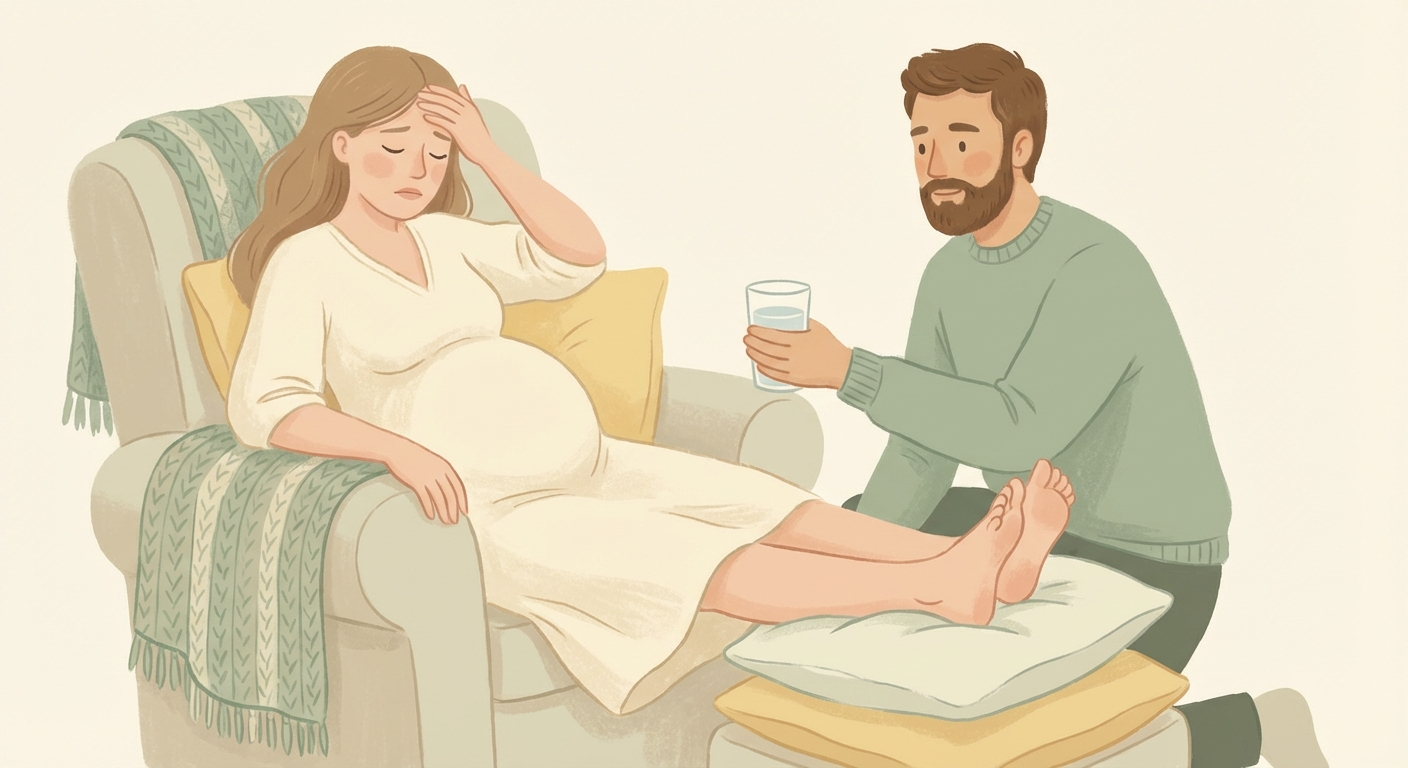
Round ligament pain is a sharp, jabbing pain in your lower abdomen or groin, typically on one or both sides. It’s caused by the stretching of the round ligaments that support your uterus as it grows. This pain is most common in the second trimester and is completely normal, though uncomfortable. Relief comes from moving slowly, gentle stretching, warm compresses, and pregnancy support belts.1
What are the Round Ligaments?
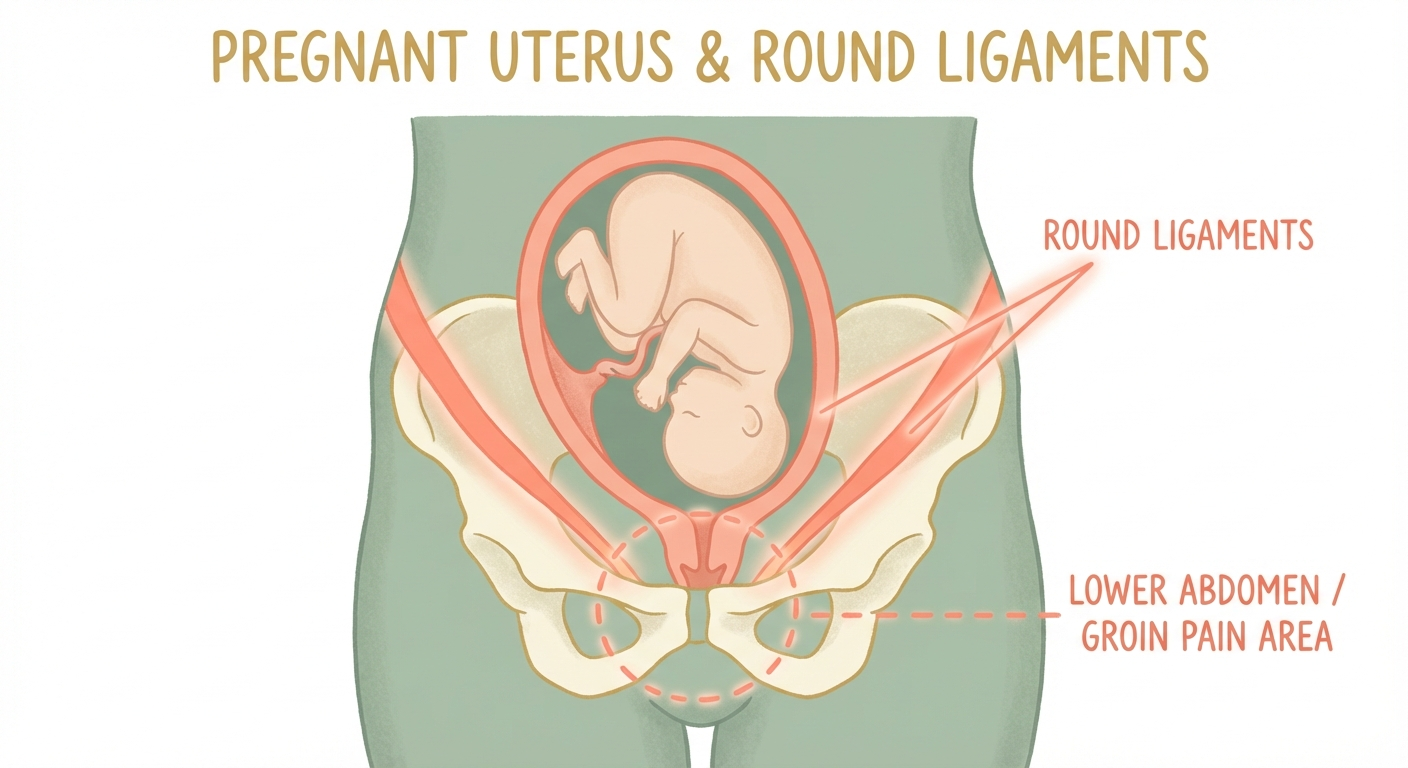
The round ligaments are two thick, rope-like bands of tissue that run from the front of your uterus, through your groin, and attach to your labia. Their job is to hold your uterus in place in your pelvis.2
During pregnancy, your uterus grows from the size of a pear to the size of a watermelon, causing these ligaments to stretch significantly. This stretching can cause sudden, sharp pain, especially with sudden movements.
What Does Round Ligament Pain Feel Like?
Sharp, stabbing pain: Usually on one side of your lower abdomen or groin, though it can occur on both sides or switch sides.
Sudden onset: Often triggered by quick movements—standing up suddenly, rolling over in bed, coughing, sneezing, laughing.
Brief duration: Typically lasts a few seconds to a few minutes, then subsides.
Location: Lower abdomen, groin area, or radiating into the upper thigh.
When it occurs: Most common in the second trimester (weeks 14-27) when uterine growth is rapid, though can continue into third trimester.
What Causes Round Ligament Pain?
Rapid uterine growth: As your uterus expands, the round ligaments stretch and thin, like rubber bands being pulled.
Sudden movements: Quick position changes cause the ligaments to contract and relax rapidly, creating sharp pain.
Baby’s position: When your baby kicks or moves, they can put pressure on the ligaments.
Physical activity: Walking, exercise, or sex can sometimes trigger the pain.
How to Ease Round Ligament Pain
Movement Modifications
Move slowly: Avoid sudden movements. Roll to your side before sitting up from lying down. Stand up gradually from sitting.3
Support your belly: When coughing, sneezing, or laughing, bend forward and support your belly with your hands to reduce ligament strain.
Avoid twisting: Turn your whole body rather than twisting at the waist.
Stretching and Exercise
Prenatal yoga: Gentle stretches help maintain flexibility in the ligaments. Cat-cow pose and hip circles can be particularly helpful.
Hip flexor stretches: These reduce tension in the area. Try gentle lunges with support.4
Pelvic tilts: These strengthen core muscles and can reduce pain frequency.
Support and Comfort
Pregnancy support belt: A maternity support belt helps redistribute weight and take pressure off the ligaments.5
Warm compress: Apply a warm (not hot) compress to the painful area for 10-15 minutes.
Rest: When pain strikes, sit or lie down and rest until it passes.
Side sleeping with pillow: Place a pillow between your knees when sleeping on your side to reduce strain.
During Activities
Pace yourself: Don’t overdo physical activity. Take frequent breaks.
Wear supportive shoes: Good arch support reduces strain on your body.
Stay hydrated: Dehydration can worsen muscle and ligament discomfort.
When to Call Your Doctor
Round ligament pain is normal, but call your healthcare provider if you experience:6
Severe pain: Pain that’s intense and doesn’t subside within a few minutes.
Accompanied symptoms: Fever, chills, bleeding, painful urination, or vaginal discharge.
Regular, rhythmic pain: Could indicate contractions rather than round ligament pain.
Pain with cramping: May signal other issues.
Persistent pain: Lasts more than a few minutes or keeps returning frequently.
Track Your Pain Patterns with Nooko
Understanding when round ligament pain occurs helps you identify triggers and modify activities. Nooko lets you log pain episodes, what you were doing when they occurred, and what provided relief. Share this information with your provider to ensure your pain is normal and not a sign of complications.
Download Nooko on the App Store | Get Nooko on Google Play
References
Footnotes
-
Cleveland Clinic. (2024). “Round Ligament Pain During Pregnancy.” https://my.clevelandclinic.org/health/symptoms/21642-round-ligament-pain ↩
-
American Pregnancy Association. (2024). “Round Ligament Pain.” https://americanpregnancy.org/healthy-pregnancy/pregnancy-concerns/round-ligament-pain/ ↩
-
Cleveland Clinic. (2024). “Round Ligament Pain During Pregnancy.” ↩
-
ACOG. (2020). “Physical Activity During Pregnancy.” https://www.acog.org/clinical/clinical-guidance/committee-opinion/articles/2020/04/physical-activity-and-exercise-during-pregnancy-and-the-postpartum-period ↩
-
Carr CA. (2003). “Use of maternity support binder.” Journal of Obstetric, Gynecologic & Neonatal Nursing. ↩
-
Cleveland Clinic. (2024). “Round Ligament Pain During Pregnancy.” ↩
Ready to track your pregnancy?
Join expecting parents using Nooko to track every milestone together.
Join the Nooko Beta →Get Weekly Pregnancy Tips
Expert advice for every stage of your journey
No spam. Privacy policy. Unsubscribe anytime.