Swollen Feet & Ankles During Pregnancy: When to Worry
Mild swelling is normal in pregnancy, but sudden severe swelling can signal preeclampsia. Learn normal vs. dangerous swelling and safe relief strategies.
By Nooko Team
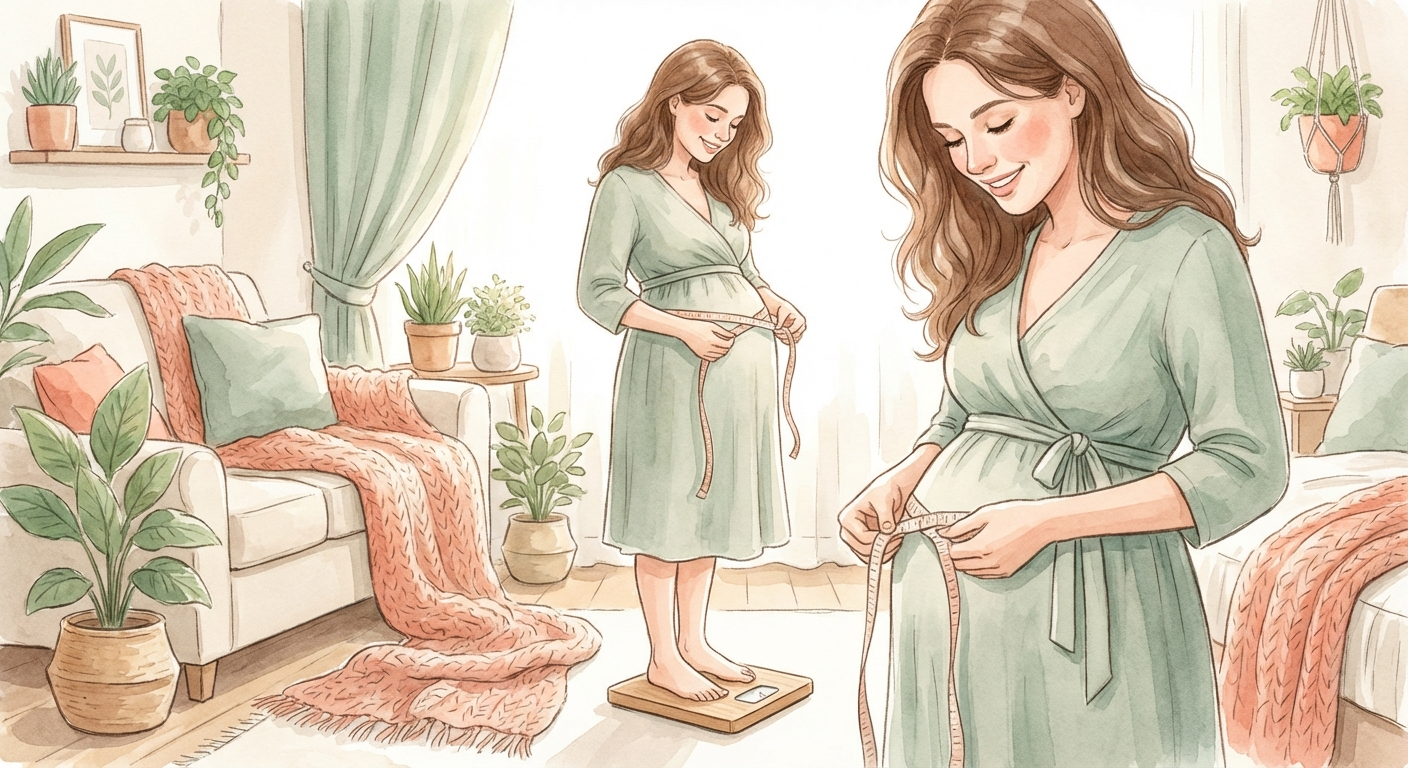
Swelling (edema) in your feet, ankles, and hands affects about 75% of pregnant people, especially in the third trimester. It’s caused by increased blood volume, hormonal changes, and your growing uterus pressing on veins. Mild, gradual swelling is normal. However, sudden severe swelling—especially in your face and hands, accompanied by headache or vision changes—can signal preeclampsia and requires immediate medical attention.1
Why Pregnancy Causes Swelling
Increased fluid retention: Your body produces about 50% more blood and body fluids during pregnancy to support your baby.2
Hormonal changes: Hormones cause your body to retain more sodium and water.
Uterine pressure on veins: Your growing uterus puts pressure on the vena cava (large vein that returns blood from your lower body to your heart), slowing circulation and causing fluid to pool in your legs and feet.
Gravity: Fluid naturally accumulates in the lowest parts of your body.
Normal vs. Concerning Swelling
Normal Swelling (Physiologic Edema)
- Gradual onset
- Affects both feet/ankles equally
- Worse at end of day or after standing
- Improves overnight or after elevating feet
- No other symptoms
- Mild to moderate severity -Improves with elevation and rest3
Warning Signs (Possible Preeclampsia)
Contact your provider immediately if you experience:4
Sudden, severe swelling:
- Face and around eyes (periorbital)
- Hands (rings suddenly don’t fit)
- Feet/ankles (much worse than usual)
Swelling plus:
- Severe headache that doesn’t respond to acetaminophen
- Vision changes (blurred vision, seeing spots, light sensitivity)
- Upper right abdominal pain
- Nausea or vomiting (new onset in second/third trimester)
- Decreased urination
- Protein in urine
Unequal swelling: One leg significantly more swollen than the other, with pain, warmth, or redness (possible blood clot).
Safe Relief for Normal Swelling
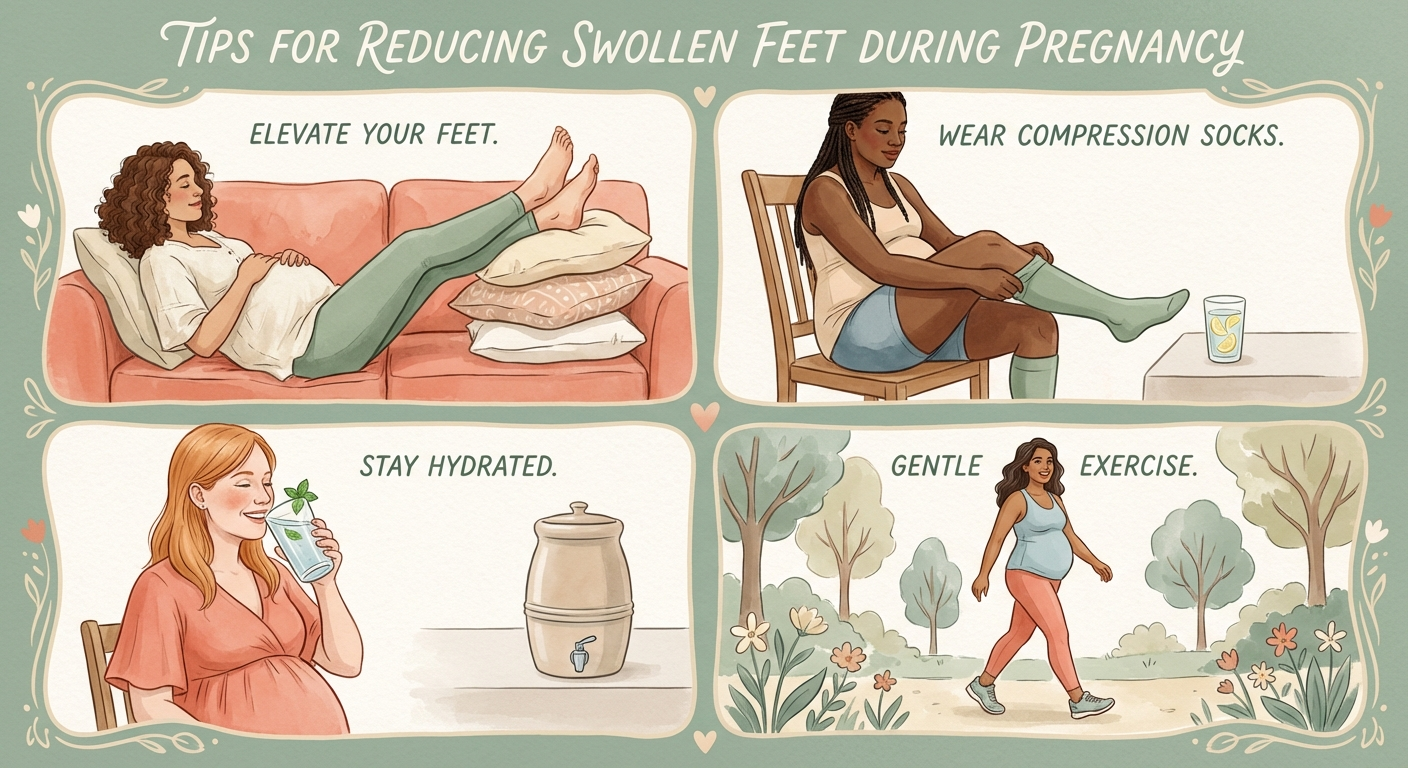
Elevation and Position
Elevate your feet: Prop feet above heart level when sitting or lying down. Do this several times daily for 15-20 minutes.
Sleep on your left side: This takes pressure off your vena cava and improves circulation.5
Avoid crossing your legs: This restricts circulation.
Change positions frequently: Don’t sit or stand for long periods without moving.
Movement and Exercise
Walk regularly: Movement helps pump fluid back toward your heart.
Ankle circles and flexes: Point and flex feet, rotate ankles. Do these throughout the day.
Swimming or water aerobics: Water pressure helps reduce swelling.
Prenatal yoga: Certain poses improve circulation.6
Diet and Hydration
Drink plenty of water: Counterintuitively, drinking more water helps reduce swelling by flushing sodium from your system.
Limit sodium: Reduce processed foods, which are high in salt.
Eat potassium-rich foods: Bananas, sweet potatoes, spinach help balance fluids.
Avoid caffeine: Can worsen dehydration.
Support and Comfort
Compression stockings: Graduated compression socks or stockings worn during the day can significantly reduce swelling. Put them on first thing in the morning before swelling starts.7
Comfortable, supportive shoes: Avoid high heels. Wear shoes with good arch support. You may need larger sizes as pregnancy progresses.
Cool compresses: Can provide temporary relief.
Massage: Gentle upward massage on legs and feet can help move fluid.
What Doesn’t Work
Diuretics (water pills): Not safe during pregnancy and can harm you and your baby.
Severely restricting water: Dehydration worsens swelling and poses other risks.
Extremely low-salt diet: Some sodium is necessary; focus on avoiding excessive amounts.
When Swelling Occurs
Second trimester: May begin noticing mild swelling.
Third trimester: Swelling typically increases, peaking in the final weeks.
Hot weather: Heat worsens swelling.
End of day: Swelling is usually worst in late afternoon/evening after being upright all day.
After long car rides or flights: Sitting for extended periods increases swelling.
Track Your Swelling with Nooko
Monitoring your swelling patterns helps distinguish normal from concerning changes. Nooko lets you log swelling severity, location, what makes it better or worse, and any accompanying symptoms. This data helps your provider assess whether your swelling is within normal limits or requires intervention.
Download Nooko on the App Store | Get Nooko on Google Play
References
Footnotes
-
American College of Obstetricians and Gynecologists. (2025). “Preeclampsia and High Blood Pressure During Pregnancy.” https://www.acog.org/womens-health/faqs/preeclampsia-and-high-blood-pressure-during-pregnancy ↩
-
ACOG. (2025). “How Your Fetus Grows During Pregnancy.” https://www.acog.org/womens-health/faqs/how-your-fetus-grows-during-pregnancy ↩
-
Mayo Clinic. (2024). “Swelling during pregnancy.” https://www.mayoclinic.org/healthy-lifestyle/pregnancy-week-by-week/expert-answers/swelling-during-pregnancy/faq-20058467 ↩
-
ACOG. (2025). “Preeclampsia and High Blood Pressure During Pregnancy.” ↩
-
Cleveland Clinic. (2024). “Is It Really All That Bad To Sleep on Your Back While Pregnant?” https://health.clevelandclinic.org/exactly-how-bad-is-it-to-sleep-on-your-back-when-youre-pregnant ↩
-
ACOG. (2020). “Physical Activity During Pregnancy.” https://www.acog.org/clinical/clinical-guidance/committee-opinion/articles/2020/04/physical-activity-and-exercise-during-pregnancy-and-the-postpartum-period ↩
-
Smyth RMD, et al. (2015). “Interventions for varicose veins and leg oedema in pregnancy.” Cochrane Database of Systematic Reviews. ↩
Ready to track your pregnancy?
Join expecting parents using Nooko to track every milestone together.
Join the Nooko Beta →Get Weekly Pregnancy Tips
Expert advice for every stage of your journey
No spam. Privacy policy. Unsubscribe anytime.